
Shadywood Tree Experts provides science-based Emerald Ash Borer (EAB) treatments and management plans for property owners in the Minneapolis West Metro. Our ISA Certified Arborists utilize trunk injections and systemic soil treatments to protect high-value ash trees from infestation. We offer expert health assessments and hazard removals for trees already impacted by EAB in Hopkins, Minnetonka, and surrounding areas, ensuring compliance with local urban forestry guidelines.
Minnesota EAB Defense: Prevention & Treatment Services
Combating the Spread of Emerald Ash Borer in the West Metro

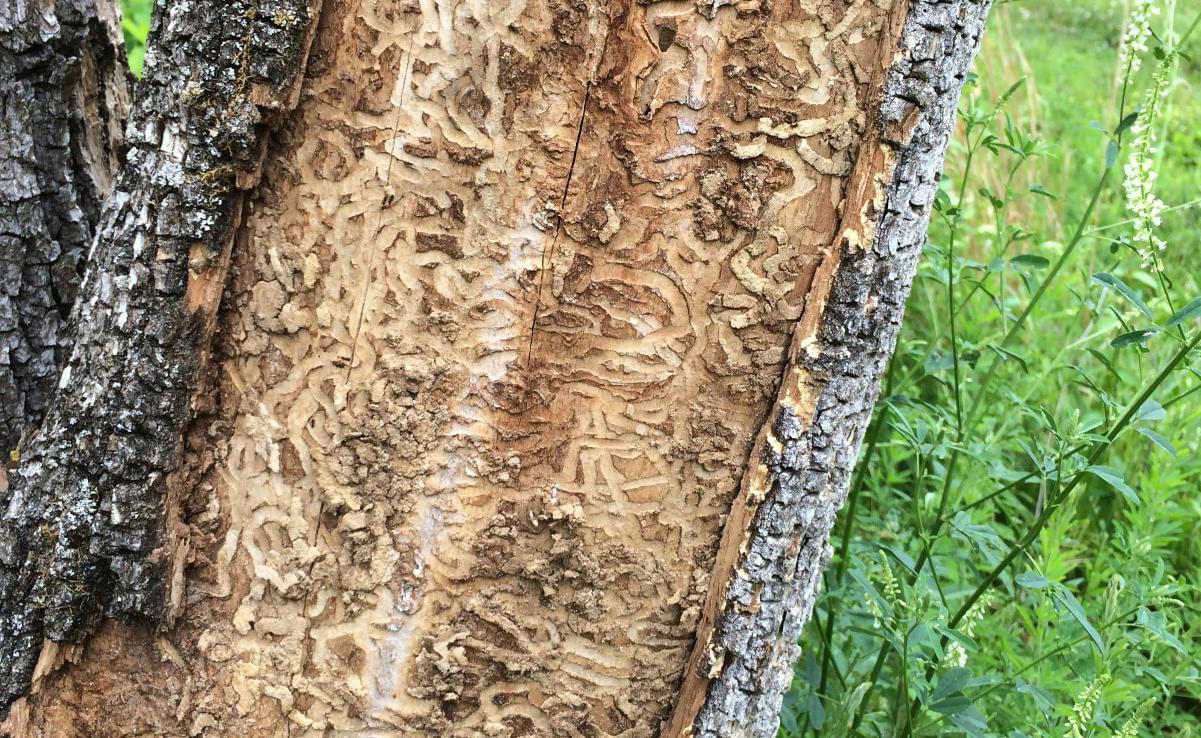

Emerald Ash Borer (EAB) is a highly destructive, invasive wood-boring insect that feeds on the tissues under the bark of ash trees. Because our native ash trees in Minneapolis and the Twin Cities lack natural defenses against this pest, they will eventually die if not treated preventively.
Early Detection is Difficult. Most homeowners don't notice an infestation until it is severe. Symptoms like canopy decline, branch dieback, trunk sprouts (epicormic sprouting), and small, D-shaped exit holes usually appear in the second or third year of infestation.
Important Note: If your tree has lost more than 30% of its canopy, it may be too late to save. However, you should always consult our arborists to confirm before removing it.
Is Your Property in the Risk Zone? Preventive treatment is 99% effective when started before the tree becomes unhealthy. The Minnesota Department of Agriculture recommends treatment for any ash tree within 15 miles of a confirmed EAB case.
Proven EAB Treatment & Application Methods
Shadywood Tree Experts is uniquely positioned to offer all available management options for Emerald Ash Borer, ranging from preventative measures to safe removal as a last resort. We use only EPA-approved treatments proven to protect ash trees in the Twin Cities environment.
1. Trunk Injection (The Gold Standard for Large Trees) For trees larger than 10 inches in diameter (DBH), we utilize trunk injections containing Emamectin Benzoate. This is widely considered the most effective defense against EAB.
How it works: The formula is injected directly into the tree's vascular system, ensuring the insecticide reaches the canopy where the beetles feed.
Frequency: This treatment provides a two-year protection window, meaning your trees only need to be treated every other year.
2. Soil & Systemic Applications (For Smaller Trees) For trees under 10 inches in diameter, we often use soil-applied or basal bark treatments. These methods utilize Imidacloprid and Dinotefuran to provide rapid uptake and protection.
How it works: These products are applied to the soil or bark and absorbed by the roots or trunk.
Frequency: Unlike trunk injections, these treatments typically provide yearly protection and must be applied annually to maintain sufficient defense levels.
When is the Best Time to Treat for EAB?
Timing is critical for successful Emerald Ash Borer protection. Systemic insecticides require active tree growth (transpiration) and adequate soil moisture to be distributed effectively throughout the canopy.
While treatment windows vary by the method used, here are the general guidelines for the Twin Cities growing season:
Soil Applications (Drench/Granular): These products take the longest to be absorbed. They must be applied in Early Spring (Mid-April to Mid-May) to be effective for the coming summer.
Basal Trunk Sprays: Utilizing Dinotefuran, these sprays are most effective when applied from Mid-May through Mid-June on trees with a diameter of 23 inches or less.
Trunk Injections: This is the most flexible method. Injections can be performed at any time the tree has a full canopy, typically from May through late August.
Crucial Note on Soil Moisture: Regardless of the method, good soil moisture is critical for the tree to uptake the treatment. During drought conditions, we may recommend watering your tree before treatment to ensure the insecticide is distributed correctly.